Alternative Investment Management Software

Risk Shell

Institutional portfolio management, risk analytics and portfolio construction for alternative and multi-asset portfolios.

Integrated investment data, stress testing, portfolio optimization, alternative investment analytics and shadow accounting within one platform.

FoF Manager hero
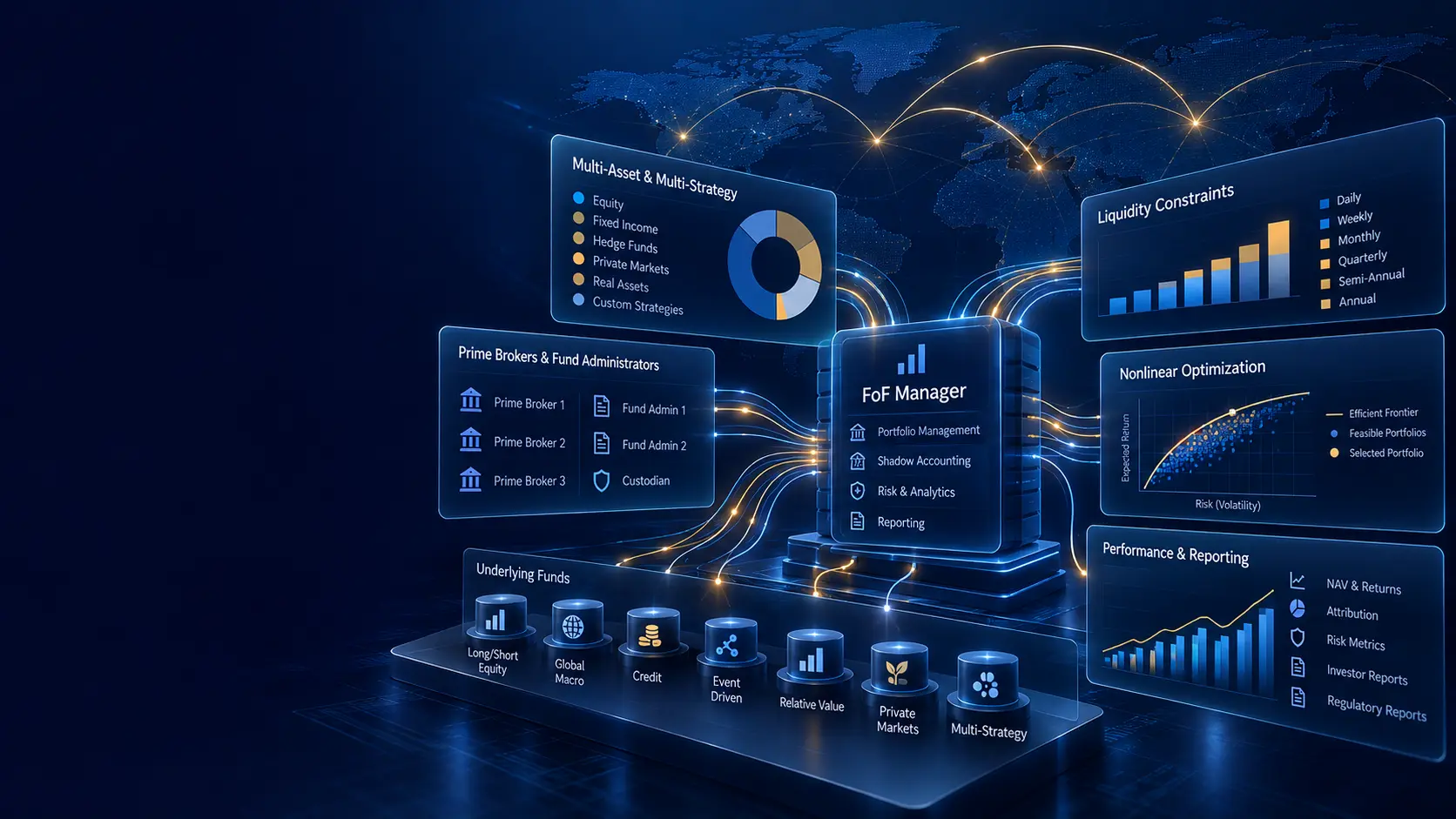
FoF Manager

Shadow Accounting for Alternative Portfolios

Manage hedge funds, private equity and multi-asset portfolios with liquidity controls, custom classifications and flexible historical accounting.

35+ hedge fund liquidity settings
Explore FoF Manager
Optimization hero
Portfolio Optimization

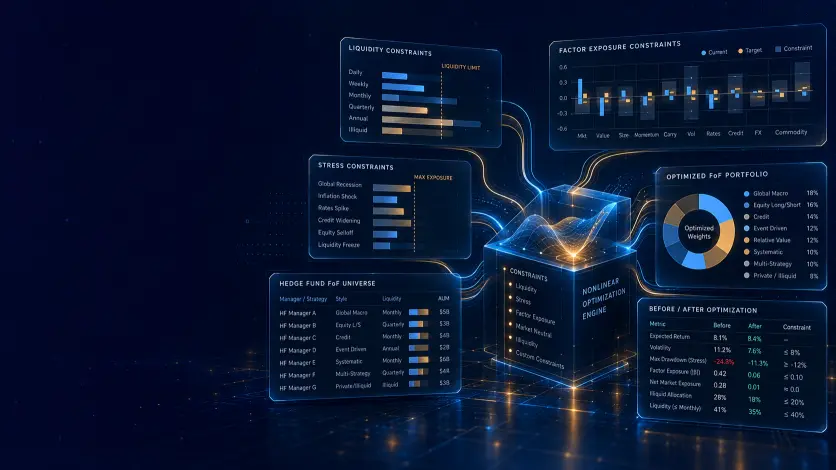
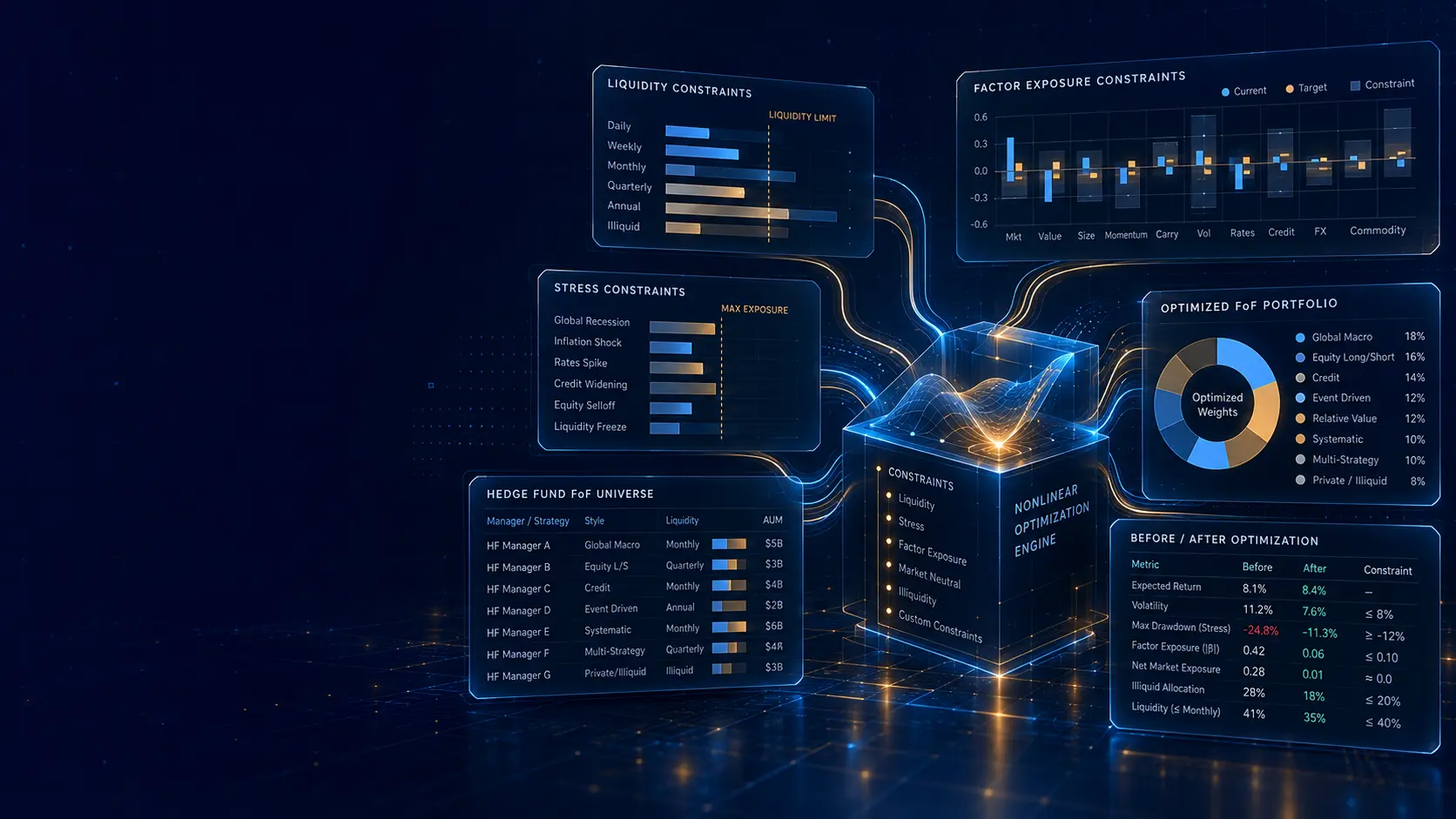
Nonlinear Portfolio Optimization

Construct hedge fund-of-funds and multi-asset portfolios with stress-test, factor-exposure, liquidity and other user-defined constraints.

Custom Constraints for market-neutral and risk-controlled portfolio construction
Explore Portfolio Optimization
Risk Shell AI hero
Risk Shell AI

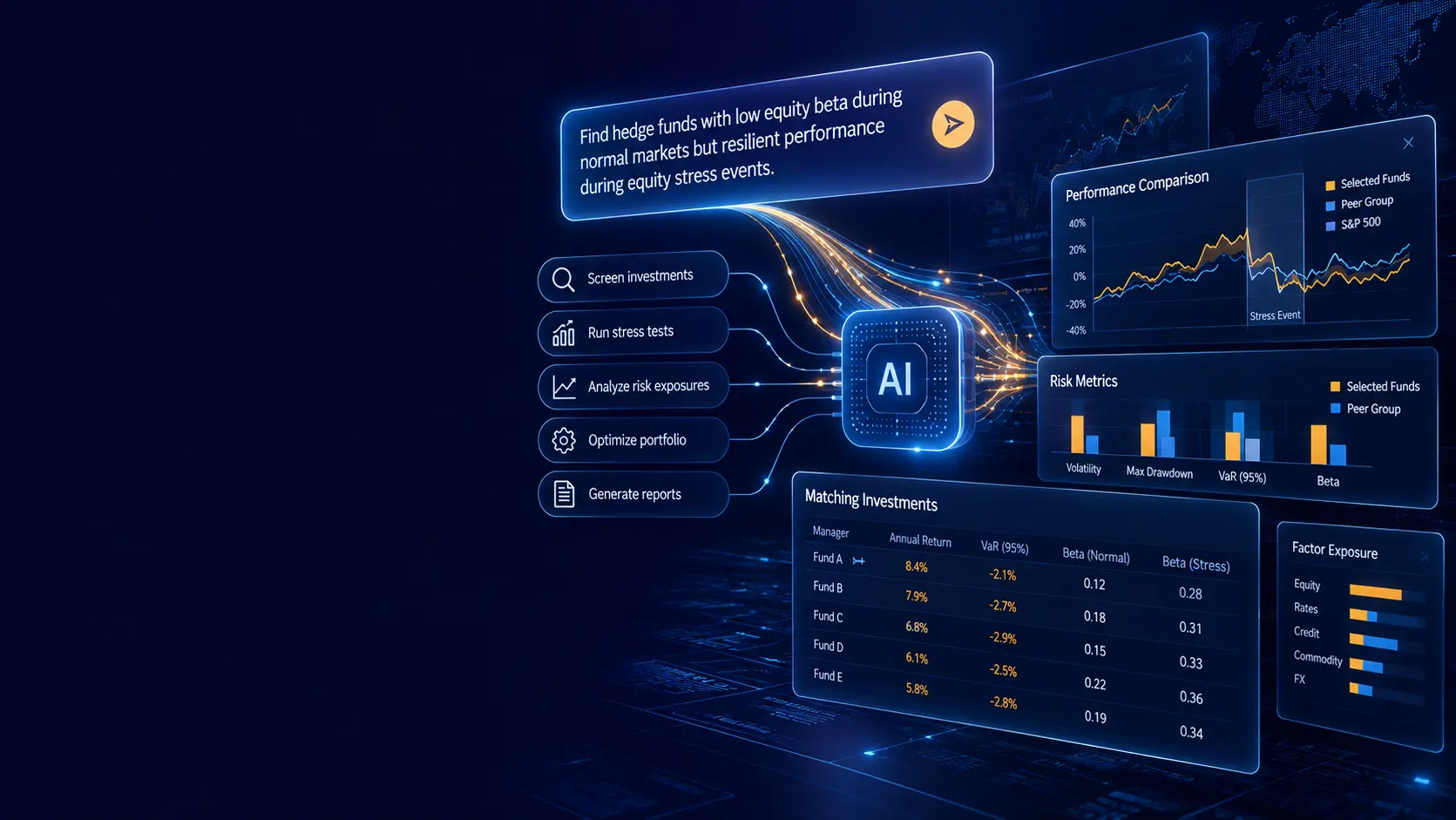
Natural-Language Access to Risk Shell

Use natural language to access investment research, risk analytics and portfolio workflows.

2.3B tokens in our in-house financial LLM
Explore Risk Shell AI
Macroeconomic Scenario Screening hero
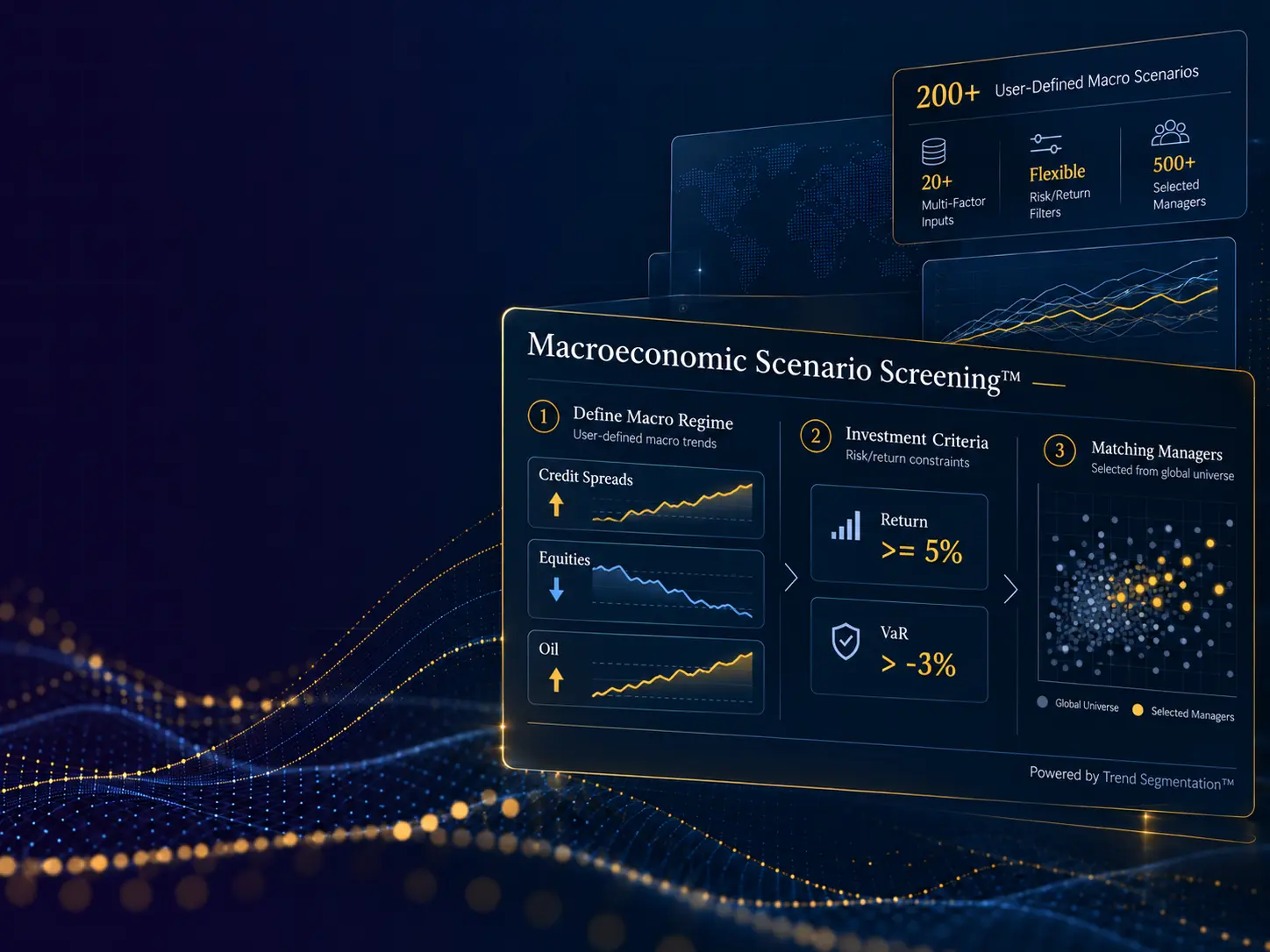
Macroeconomic Scenario Screening

Select Assets for the Scenario You Define

Screen managers by risk and return targets under user-defined macroeconomic scenarios.

Trend Segmentation™ proprietary regime-analysis engine
Explore Scenario Screening
Peer-relative Stress Testing
Portfolio Stress Testing

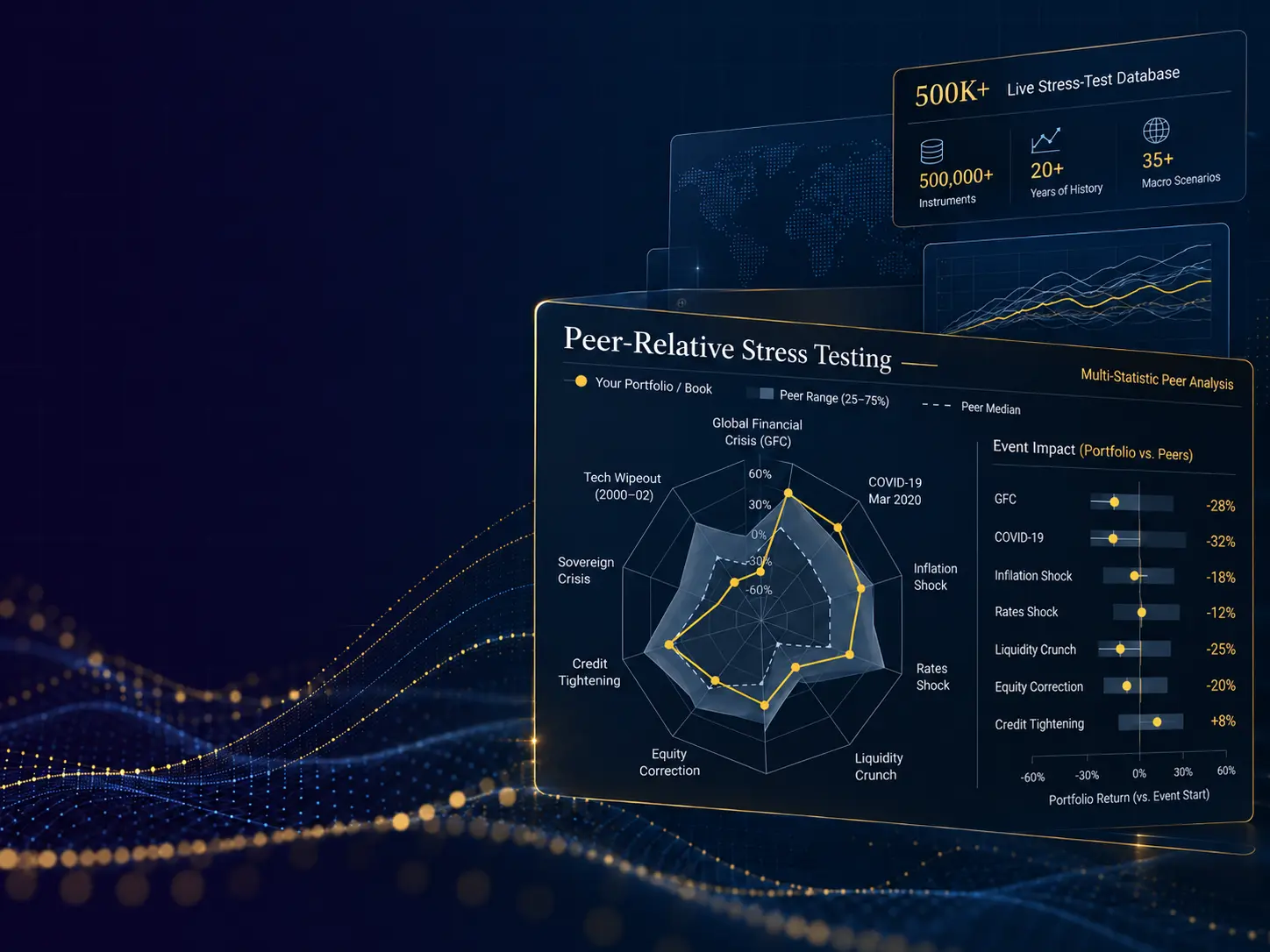
Peer-Relative Stress Testing

Compare extreme-event outcomes with a relevant peer group.

500K+ live stress-tested instruments
Explore stress testing

Custom Data & Virtual Databases

Risk Shell allows institutions to create and maintain proprietary assets and virtual databases alongside subscribed vendor data. Custom assets can contain performance returns, prices, AUM, cash flows, descriptive data and user-defined classifications.

The Custom Data framework extends the standard Risk Shell data model rather than creating a separate data environment. Users can combine standard vendor fields with their own data fields, maintain independent return histories and create assets that do not exist in commercial databases.

Once a return or cash-flow series is saved, the custom asset becomes part of the Risk Shell investment universe and can be used throughout the platform.

Virtual Custom Databases

Risk Shell virtual databases let users create proprietary assets, populate historical data and custom fields, and use those assets directly across the platform’s analytical and portfolio tools.

  • Creating user-defined custom assets

    Create assets directly in an Excel-like grid:

    • Enter asset names directly
    • Create individual assets or large datasets (batch mode)
    • No external database setup required
  • Adding return series

    Populate the required historical series:

    • Copy and paste dates and returns
    • Daily, weekly or monthly frequency
    • Optional price and AUM series
    • Cash-flow series maintained separately
  • Adding descriptive data

    Optionally enrich assets with additional data:

    • Use standard data-vendor fields
    • Create unlimited user-defined fields
    • Maintain proprietary classifications and attributes
  • Use in Risk Shell

    Once performance data is saved, custom assets become available throughout Risk Shell:

    • Risk and factor analysis
    • Stress testing and peer analysis
    • Portfolio construction and optimization
    • Other Risk Shell analytical components

Holdings-based vs Returns-based Analysis

PERFORMANCE-BASED ANALYSIS

Returns-Based Analysis

Analyse a fund or portfolio from its historical return series to estimate risk, factor behaviour and relationships with markets and benchmarks.

Data source
Historical fund or portfolio returns.
Primary view
Observed risk and performance behaviour over the selected historical period.
Factor analysis
Factor sensitivities are estimated statistically from the relationship between portfolio returns and selected factors.
Portfolio changes
Changes in underlying positions are reflected indirectly through subsequent portfolio returns.
Return history
Requires a sufficiently informative return series for reliable statistical analysis.
Transparency
Can be applied without detailed knowledge of individual underlying holdings.
Main question
How has the fund or portfolio behaved historically, and what risks and factor relationships are evident from its returns?
BEST FOR

Analysing historical fund behaviour when detailed holdings are unavailable or when the investment process is evaluated primarily through realised returns.

UNDERLYING PORTFOLIO ANALYSIS

Holdings-Based Analysis

Analyse the underlying positions directly to measure current exposures, portfolio structure and risk across asset classes.

Data source
Reported portfolio holdings, including long and short positions across supported asset classes.
Primary view
Current portfolio exposures and risks derived from the underlying positions.
Factor analysis
Factor exposures are evaluated from the underlying instruments and their portfolio allocations.
Portfolio changes
Changes in holdings can be reflected as soon as a new holdings snapshot becomes available.
Return history
Useful for funds with short return histories because analysis is based on the underlying portfolio rather than solely on past fund returns.
Transparency
Provides direct visibility into underlying asset, sector, industry, currency and other portfolio exposures.
Main question
What risks and exposures are embedded in the portfolio's current underlying holdings?
BEST FOR

Investors with access to holdings data who require a current view of underlying exposures, consolidated portfolio risk and multi-asset position-level analysis.

Custom Data Features

Extended Data Structure

Custom assets can use all standard vendor fields plus unlimited user-defined fields. Users can also maintain return frequencies not available in the original vendor databases.

Independent Return Series

Maintain proprietary return histories for assets that already exist in vendor databases. Risk Shell can use vendor returns, user-maintained returns, or both simultaneously.

Returns & Cash Flows

Create standard performance return series or cash-flow series for private equity and other illiquid investment analysis.

Integrated Across Risk Shell

Custom assets are integrated with vendor databases across Risk Shell, including global search, peer group analysis, risk analytics and portfolio tools.

User-Defined Descriptive Fields

Create proprietary descriptive fields once and use them across all subscribed Risk Shell databases. Custom fields remain private to their owner.

Team Access & Permissions

Institutional teams can share access to custom assets created by other team members, with separate read, modify and delete permissions.

Custom Classifications & Ownership

Asset owners retain full control over proprietary data and can apply their own classifications, including classifications that override vendor-defined categories.

Data Import & Protection

Return tables can be copied directly from Excel or Adobe PDF reports. Custom assets are backed up twice daily and synchronized across redundant servers.

Conventional vs Macroeconomic Scenario Screening

CONVENTIONAL SCREENING

Traditional Asset Search

Screen investment universes using statistics calculated over a complete trailing period or fixed historical interval.

Primary objective
Identify assets with attractive overall historical risk-return characteristics.
Historical sample
Complete trailing period or user-defined closed interval.
Market conditions
Favourable, normal and adverse market periods are averaged within the same statistical sample.
Manager assessment
Performance statistics reflect the complete period and may conceal how effectively a manager responded to difficult markets.
Statistics
Return, drawdown, VaR, volatility, correlation, factor exposure and other measures calculated across the full sample.
Result
Assets satisfying the selected criteria on average over the chosen historical period.
Main question
Which assets have produced the preferred historical statistics over the selected period?
BEST FOR

General quantitative screening when the investment decision is based primarily on full-period historical performance and risk characteristics.

PROPRIETARY CONDITIONAL SCREENING

Macroeconomic Scenario Screening™

Identify investments that continue to perform effectively when markets are difficult by evaluating them only during user-defined adverse macroeconomic conditions.

Primary objective
Find strong assets and managers specifically during troubled market conditions, where investment selection is most difficult.
Historical sample
Only intervals in which the selected adverse macroeconomic factor states occur simultaneously. The intervals need not be contiguous.
Market conditions
Built for troubled markets. Scenarios are deliberately constructed around difficult environments such as falling equities, widening credit spreads or other unfavourable factor combinations.
Manager assessment
Evaluates whether manager skill and trading strategy remained effective and consistent specifically during adverse market periods.
Statistics
Return, drawdown, VaR, volatility, correlation, regression and other Risk Shell statistics are recalculated on the conditional sample.
Result
Assets whose risk-return characteristics remain acceptable when the selected difficult market conditions prevail.
Main question
Which assets and managers performed effectively when markets were under stress rather than merely looking strong during favourable periods?
BEST FOR

Institutions seeking managers, funds and other investments with demonstrated resilience, consistent strategy execution and effective risk management during stressed joint macro states.

Custom Data or Database Integration?

NATIVE RISK SHELL FEATURE

Custom Data

Create and maintain proprietary assets and virtual databases directly in Risk Shell.

Implementation
Included with the Custom component
Availability
Immediate
Recommended scale
Up to approximately 3,000–4,000 assets
User-defined fields
Supported
Data maintenance
Risk Shell GUI
Synchronization
Changes available instantly
BEST FOR

Institutions creating and maintaining proprietary assets directly in Risk Shell.

CUSTOM INTEGRATION

Database Integration

Connect an institution's existing proprietary database directly to Risk Shell.

Implementation
On-demand development
Availability
Typically 2–3 weeks
Recommended scale
Unlimited
User-defined fields
Supported
Data maintenance
Client's in-house database tools
Synchronization
Institutional database synchronized with Risk Shell
BEST FOR

Institutions that already maintain larger proprietary databases and want to use them in Risk Shell.

Explore Risk Shell Data Solutions

Global Financial Data covering alternative and traditional assets

  • Global data in Risk Shell

    More than 550,000 traditional and alternative investment vehicles across global markets, covering all major asset classes and geographical regions within the Risk Shell data environment.

    Explore Data Coverage

  • Integrated Vendor Data

    Data feeds from established institutional providers are processed and compiled into Risk Shell-format databases covering traditional and alternative investments across multiple asset classes.

    Explore Data Feeds