
Alternative Investment Management Software

Risk Shell

Institutional portfolio management, risk analytics and portfolio construction for alternative and multi-asset portfolios.

Integrated investment data, stress testing, portfolio optimization, alternative investment analytics and shadow accounting within one platform.

FoF Manager hero
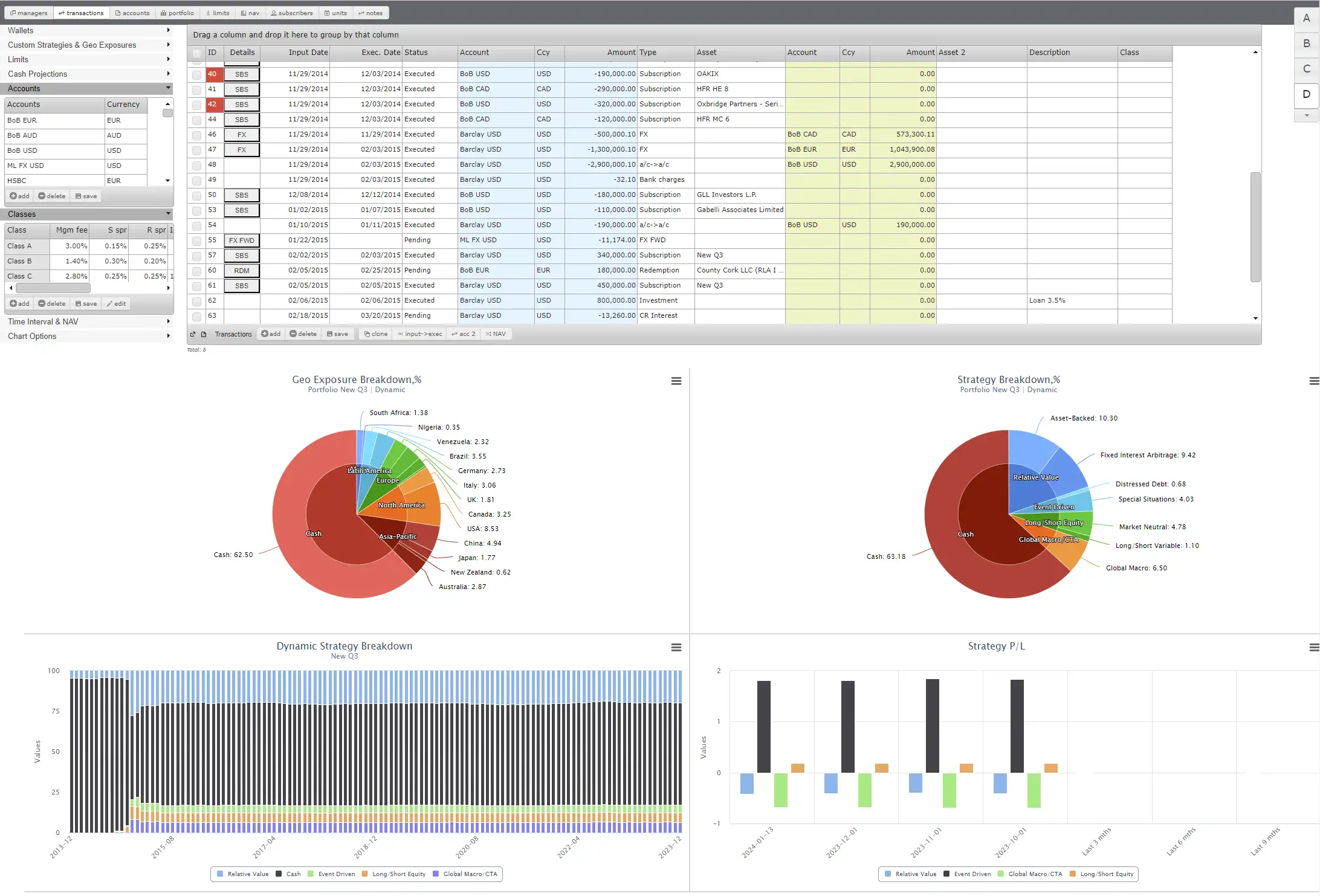
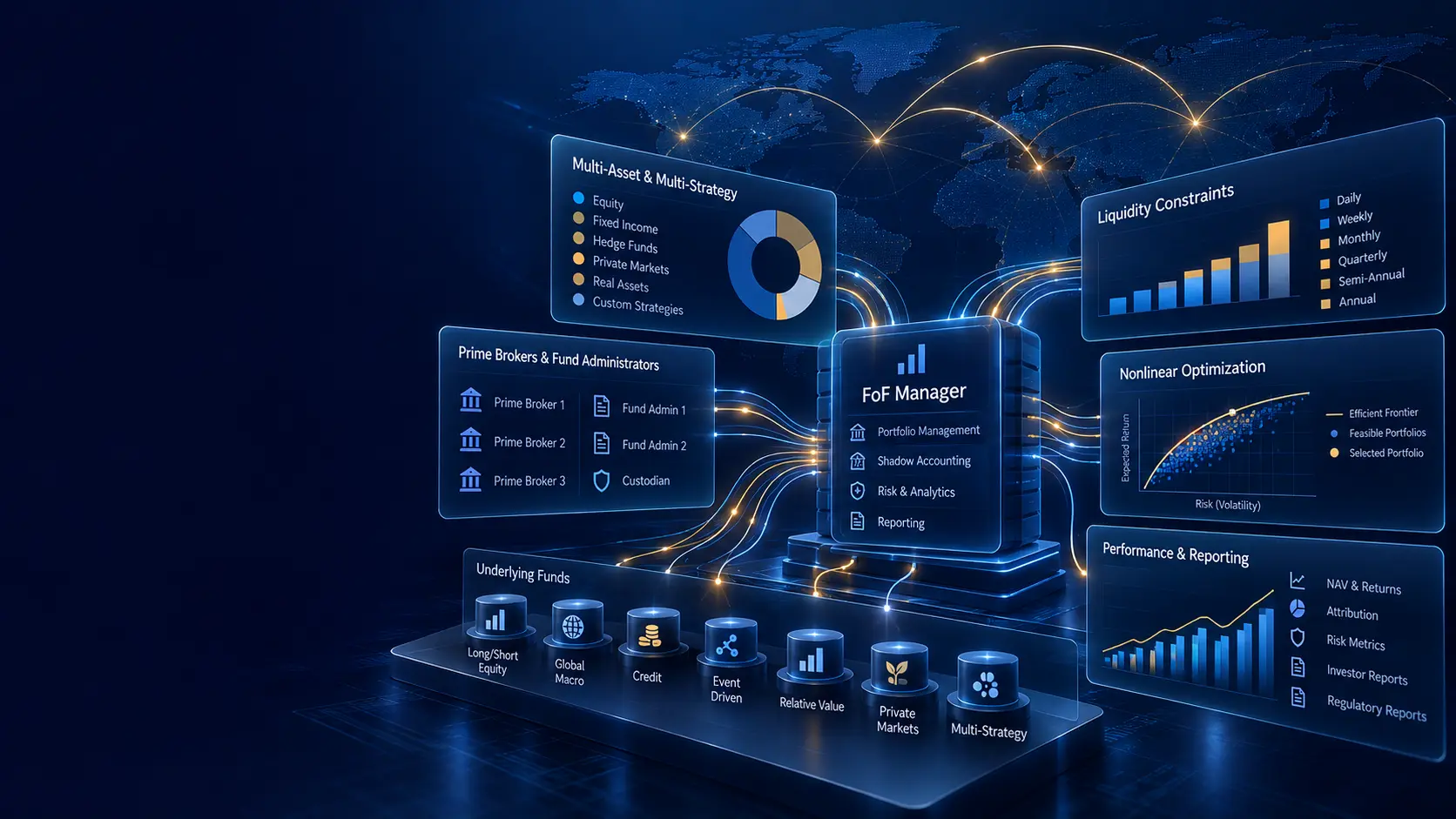
FoF Manager

Shadow Accounting for Alternative Portfolios

Manage hedge funds, private equity and multi-asset portfolios with liquidity controls, custom classifications and flexible historical accounting.

35+ hedge fund liquidity settings
Explore FoF Manager
Optimization hero
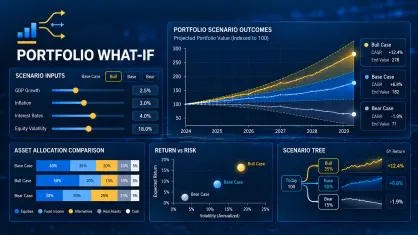
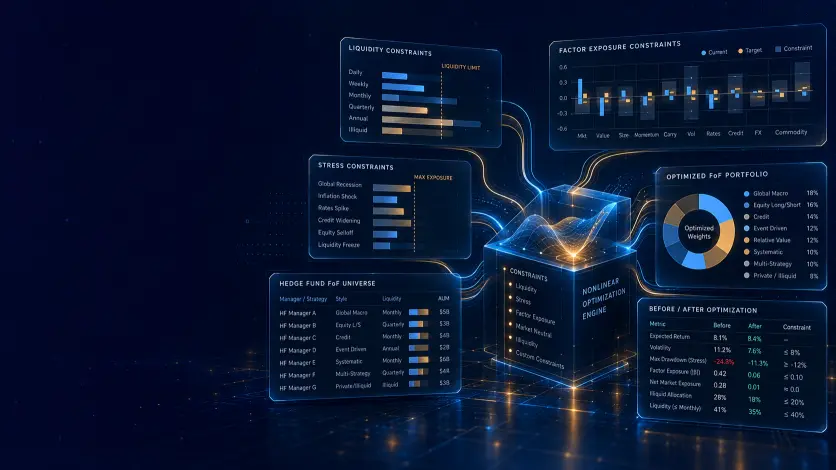
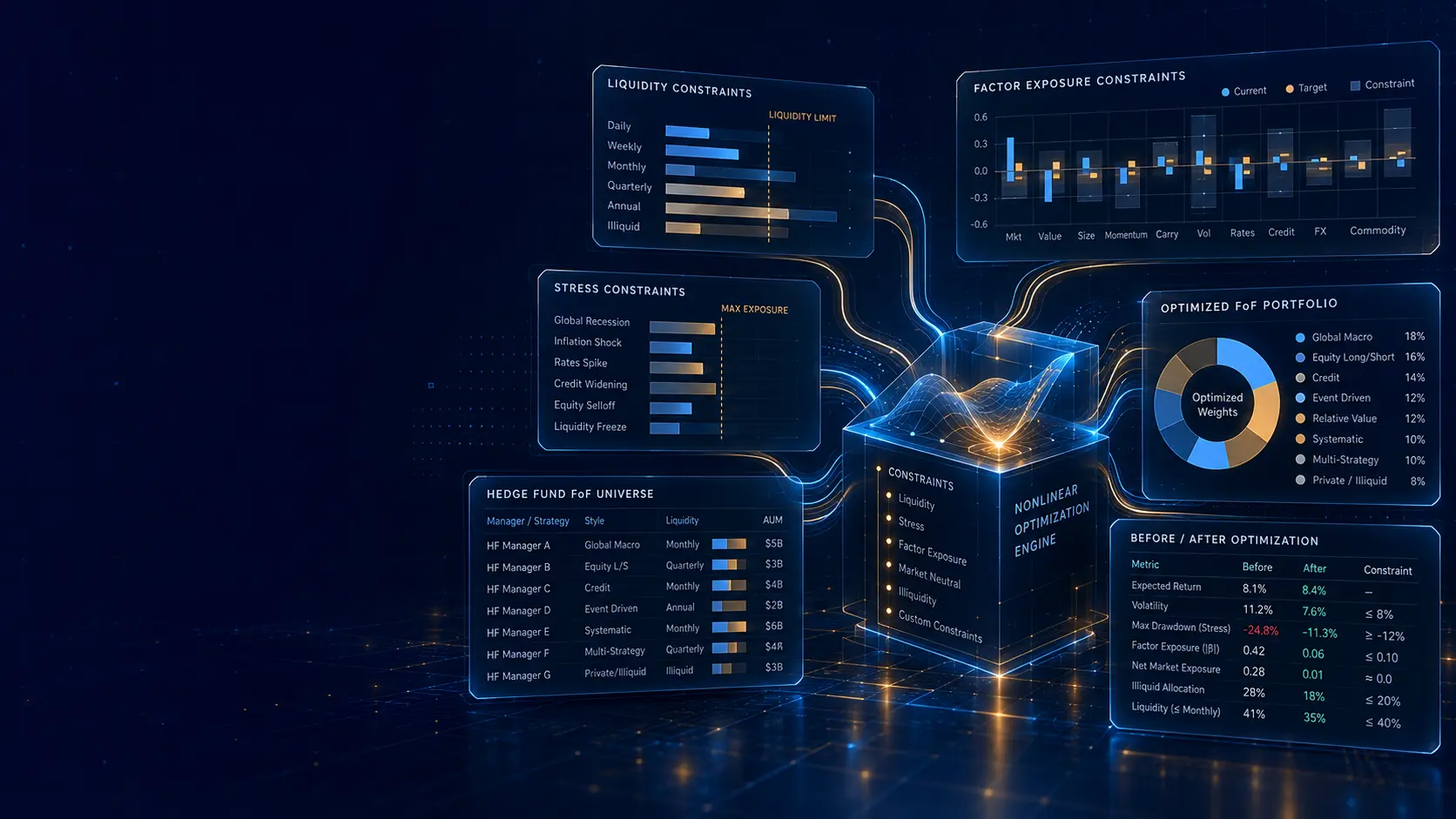
Portfolio Optimization

Nonlinear Portfolio Optimization

Construct hedge fund-of-funds and multi-asset portfolios with stress-test, factor-exposure, liquidity and other user-defined constraints.

Custom Constraints for market-neutral and risk-controlled portfolio construction
Explore Portfolio Optimization
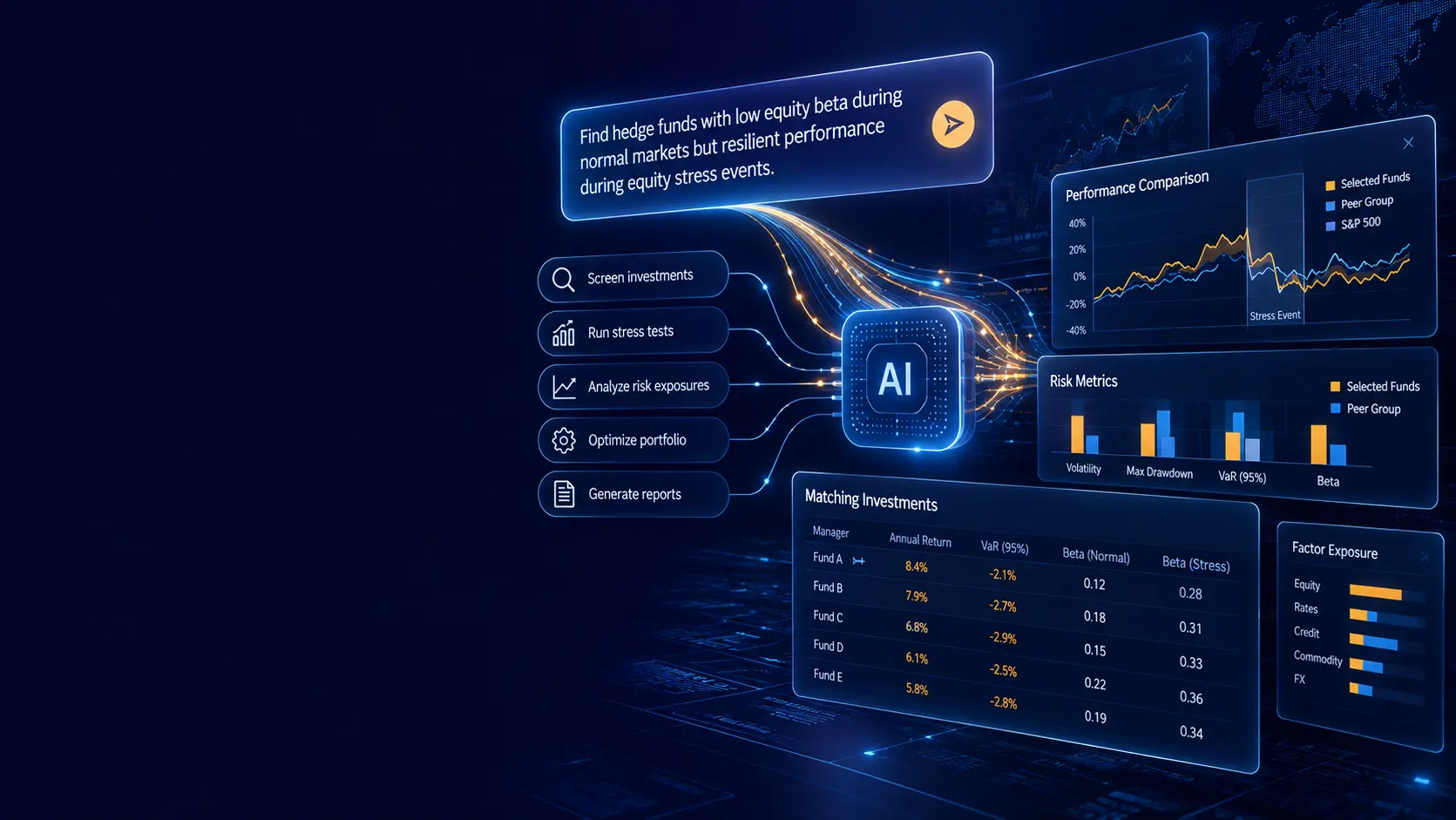
Risk Shell AI hero
Risk Shell AI

Natural-Language Access to Risk Shell

Use natural language to access investment research, risk analytics and portfolio workflows.

2.3B tokens in our in-house financial LLM
Explore Risk Shell AI
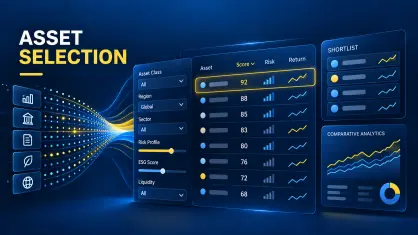
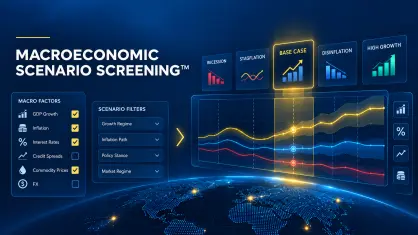
Macroeconomic Scenario Screening hero
Macroeconomic Scenario Screening

Select Assets for the Scenario You Define

Screen managers by risk and return targets under user-defined macroeconomic scenarios.

Trend Segmentation™ proprietary regime-analysis engine
Explore Scenario Screening
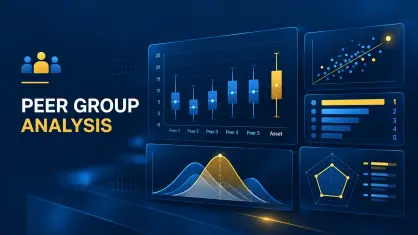
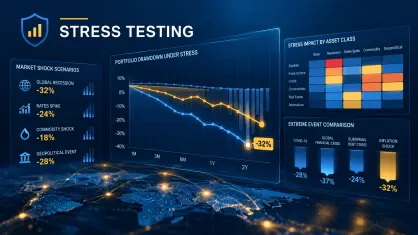
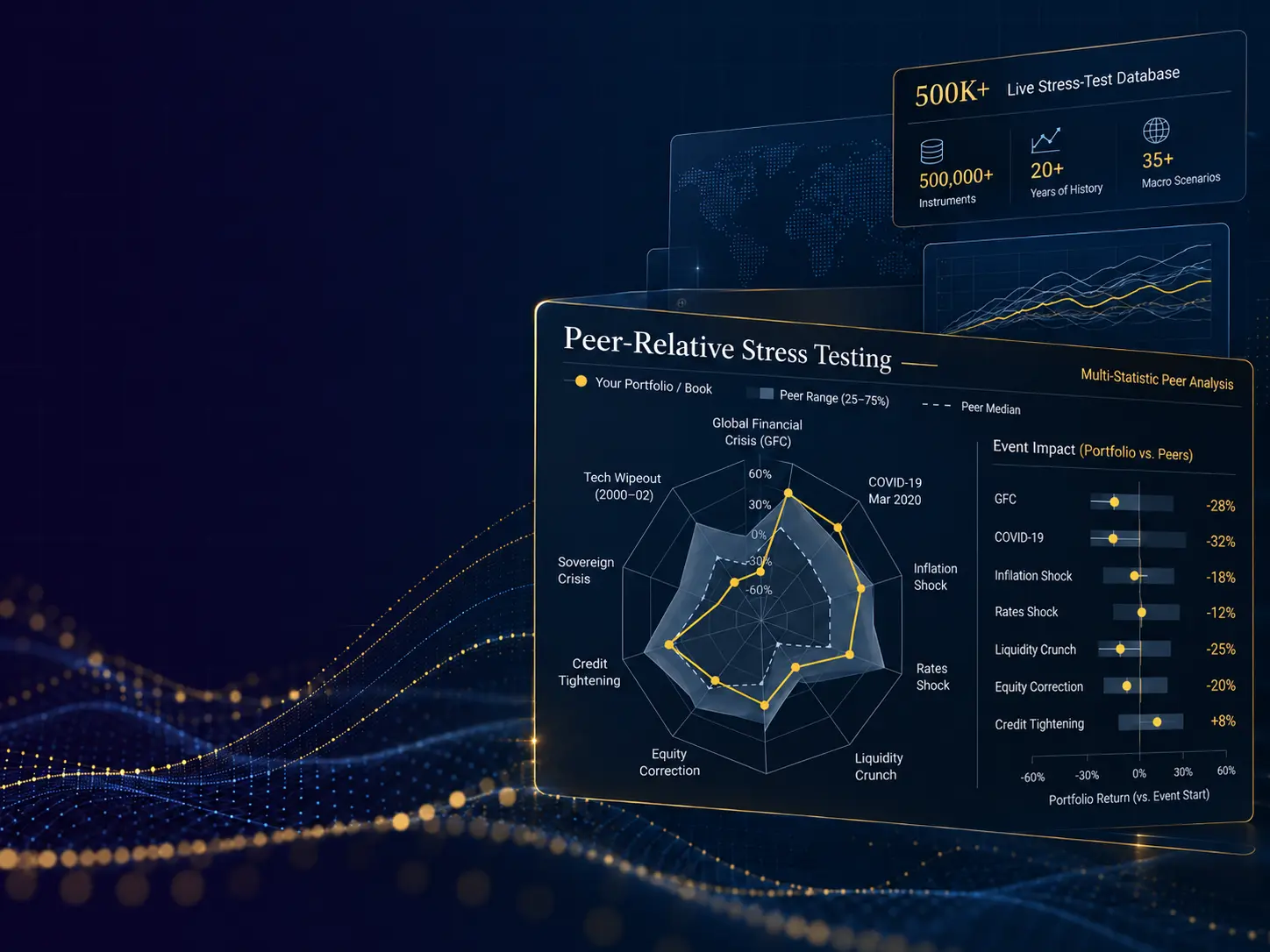
Peer-relative Stress Testing
Portfolio Stress Testing

Peer-Relative Stress Testing

Compare extreme-event outcomes with a relevant peer group.

500K+ live stress-tested instruments
Explore stress testing

Private Equity Portfolio Management Software

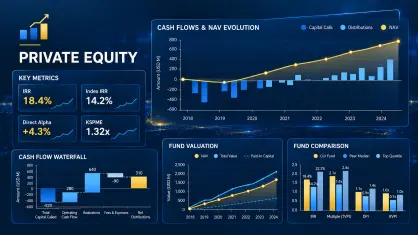
Private equity investments are becoming increasingly popular, attracting a wide range of investors, from big institutions to wealthy individuals and family offices. However, investing in private equities is not as straightforward as buying stocks or bonds. It requires special tools and techniques because private equities are different from regular investments. Conventional methods for assessing risks of equities or fixed income instruments are hardly applicable for private equities. To meet the needs of private equity investors, multi-asset managers, and family offices allocating in private equities, Risk Shell includes a dedicated component specifically designed for private equity risk management.

Private Equity Risk Management

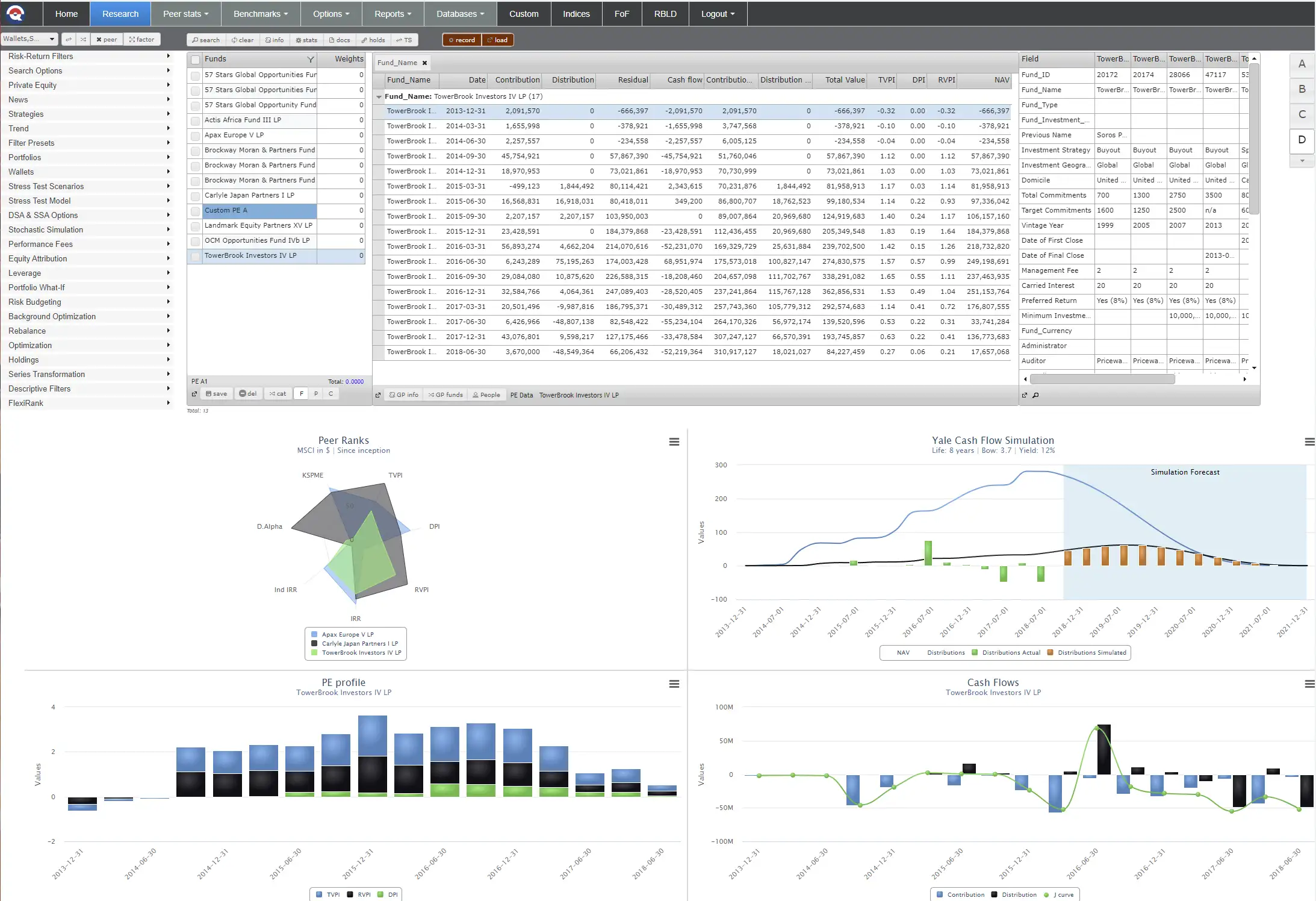
The private equity analysis within Risk Shell offers the following features:

  • A broad range of private equity risk statistics including Direct Alpha, Index IRR, and KSPME
  • The Yale Cashflow Forecasting model
  • Automated mapping with external or in-house custom private equity databases
  • Over 100 search filters covering funds, general and limited partners
  • Various options for calculating PE risk statistics: Risk Shell database, real-time or vendors' data
  • Integrated Multi-statistic Peer Group Analysis for private equities
  • 3D interactive charting adopted to PE multi-faceted risk visualization
  • Custom user-defined cash flow assets, like real estate investments

Private Equity Portfolio Management

The Risk Shell FoF Manager seamlessly includes private equities as separate portfolios or combines them with other assets. For instance, you can make various portfolios of global equities, hedge funds (fund of funds), private equities, or real estate. Then, you can analyze each portfolio separately using its specific risk assessment models or combine them to see the overall risk of all your investments across different asset classes.
Private Equity FAQs

Why are conventional risk models often unsuitable for private equity?▼

Traditional risk models are primarily designed for liquid, frequently traded assets with observable market prices and relatively short measurement intervals. Private equity presents different modelling challenges, including illiquidity, infrequent valuations, long investment horizons, irregular cash flows, portfolio concentration, and potentially nonlinear investment outcomes. These characteristics require risk analysis designed specifically for private-market investments rather than simply applying conventional public-market assumptions.

Why can private equity risk models also be used for real estate investments?▼

Private equity and real estate share important cash-flow characteristics. Both typically involve long-term investments, capital contributions or reinvestments, and subsequent distributions or operating income. These cash-flow dynamics make private-equity-style modelling applicable to many real estate investments, particularly where valuation and liquidity cannot be assessed in the same way as publicly traded securities.

Why is private equity risk modelling not commonly covered in mainstream finance programs?▼

Traditional finance education has historically focused on publicly traded securities and market-based risk measures for which large amounts of standardized, high-frequency data are available. Private equity requires a different analytical framework because investments are illiquid, valuations may be periodic rather than continuously observable, and performance depends heavily on investment-level cash flows, transaction timing, and long-term portfolio dynamics. As a result, private equity risk management is generally a more specialized area of institutional investment analysis.

Do you provide training on private equity risk management and Risk Shell?▼

Yes. ABC Quant provides customized training for new Risk Shell clients at no additional cost. Training can be tailored to the user's investment and risk-management requirements and can include private equity risk modelling, cash-flow analysis, performance measurement, portfolio analytics, and the practical use of Risk Shell's private-equity tools.

What is Index IRR for private equity, and how does it differ from traditional IRR?▼

Traditional IRR is calculated directly from the investment's actual cash flows and is therefore specific to the timing and magnitude of those cash flows. Risk Shell's Index IRR provides an index-based approach for analysing private equity performance by relating investment outcomes to the behaviour of a selected reference index. It can therefore be used as an additional performance perspective alongside traditional cash-flow-based IRR and other private-equity performance measures.

What is KSPME and how can it be used in private equity analysis?▼

KSPME is a Risk Shell statistic designed to provide an additional way of analysing private equity performance and risk where investment cash flows are irregular and outcomes are uncertain. Rather than relying exclusively on a single IRR figure, KSPME can be used within a broader analysis of the distribution of potential investment outcomes. This makes it particularly relevant for institutional investors assessing private equity investments and portfolios where cash-flow uncertainty is an important component of risk.

What does Direct Alpha measure in private equity?▼

Direct Alpha is a private-market performance measure that evaluates investment performance relative to a selected public-market benchmark by translating private equity cash flows into a benchmark-relative framework. It provides an additional perspective on value creation that can complement traditional measures such as IRR and multiple-based performance statistics.

Can Risk Shell aggregate data from multiple private equity databases and our proprietary datasets?▼

Yes. ABC Quant provides custom data integration for institutions that use multiple private equity data sources. Vendor databases and proprietary in-house datasets can be connected to Risk Shell and consolidated into an integrated analytical environment. This allows users to work with their existing data while applying Risk Shell analytics across the combined private equity dataset.

Can Risk Shell analyse private equity portfolio risk rather than individual investments only?▼

Yes. Risk Shell is designed to support analysis at both the investment and portfolio levels. Private equity holdings can be aggregated to analyse portfolio-level exposures, concentration, cash-flow behaviour, performance, and other relevant risk characteristics. This provides an institutional framework for evaluating the interaction of individual private-market investments within a broader portfolio.

Can Risk Shell forecast private equity portfolio cash flows?▼

Yes. Risk Shell includes cash-flow forecasting capabilities for private-market portfolios. Historical investment and distribution patterns can be analysed to support forecasts of future capital calls, distributions, and portfolio cash requirements. These analyses can be useful for liquidity planning, commitment management, and portfolio-level risk assessment.

Can private equity investments be benchmarked against public markets in Risk Shell?▼

Yes. Risk Shell provides several ways to place private equity performance in a broader market context, including benchmark-based and index-based analysis. Depending on the methodology selected, institutional investors can compare private-market outcomes with relevant public-market indices while retaining the underlying private equity cash-flow information.

Can Risk Shell perform stress testing for private equity portfolios?▼

Yes. Risk Shell can incorporate stress-testing and scenario-analysis techniques into private-market portfolio analysis. This allows institutions to examine how changes in assumptions, market conditions, valuations, or cash-flow patterns may affect portfolio-level outcomes and risk.

Can Risk Shell combine private equity data with traditional asset classes?▼

Yes. Private equity investments can be analysed alongside traditional and other alternative asset classes within a broader multi-asset portfolio framework. This allows institutions to assess private-market exposures together with public equities, fixed income, hedge funds, commodities, and other investments when evaluating overall portfolio risk and diversification.

Private Equity Risk Evaluation

04 Nov 2026;
04:00PM - 05:00PM
Uncorrelated returns & market-neutral portfolios
04 Nov 2026;
05:00PM - 06:00PM
TAA: its pros and cons
13 Nov 2026;
03:00PM - 05:00PM
RiskMetrics Integration
18 Nov 2026;
04:00PM - 05:00PM
Private Equity Analysis
02 Dec 2026;
04:00PM - 05:00PM
Uncorrelated returns & market-neutral portfolios
02 Dec 2026;
05:00PM - 06:00PM
TAA: its pros and cons
04 Dec 2026;
03:00PM - 05:00PM
RiskMetrics Integration
16 Dec 2026;
04:00PM - 05:00PM
Private Equity Analysis

Risk Shell Components

Risk management and portfolio construction for alternative investments