




Factor Analysis & Style Analysis Software for Hedge Funds and Fund of Funds
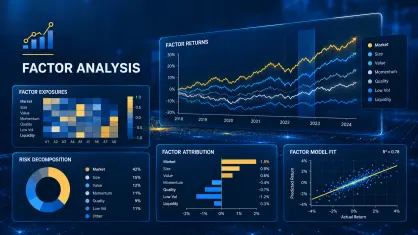
The Factor Analysis component of Risk Shell is designed to identify the sources of fund, asset and portfolio returns by estimating their exposure to selected market, style and macroeconomic factors. In a returns-based model, the return series of the asset being analyzed is treated as the dependent variable, while the selected factors form the explanatory variables of a multivariate regression model.
The resulting factor model estimates how strongly the asset has historically responded to each factor. Depending on the analysis, these factors may include equity and bond indices, hedge fund style indices, interest rates, credit spreads, currencies, commodities, volatility measures or other economic and market series. Users are not restricted to a predefined factor model and can construct their own factor subsets for different strategies, managers or research objectives.
Risk Shell supports both Returns-Based Style Analysis and Holdings-Based Style Analysis, together with Static and Dynamic models. This allows investment teams to examine both the current structure of factor exposures and the way those exposures have changed through time.
Conventional style analysis, in the Sharpe (1992) form used on mutual funds, decomposes a return into a fixed set of style indices, often with positive weights summing to 100 per cent. The set is value, growth, size and similar buckets. It assumes the categories are the right factors and that the manager is long them. Neither assumption holds for a hedge fund. The stated strategy can be weakly related to the return. The relevant factors may be credit, rates, volatility or a market the offering document does not name, and the exposure may be short. A fixed style box then attributes the residual to selection when the factor set was wrong. Risk Shell is built for that case: monthly, non-transparent alternative series, not a daily long-only book mapped onto a preset style grid.
Returns-Based and Holdings-Based Factor Analysis
Returns-Based Style Analysis estimates factor exposures from the historical return series of a fund or other investment. This approach is particularly important for hedge funds and alternative investments, where complete position-level data may be unavailable, delayed or reported only at specific intervals.
A returns-based model can identify the market and style factors that have been most relevant to observed performance without requiring full portfolio transparency. It can therefore be used for hedge fund research, manager comparison, due diligence and the analysis of funds where only NAV or return history is available.
Holdings-Based Analysis approaches the problem from the underlying portfolio positions. Where holdings data is available, exposures can be analyzed directly from the securities and instruments held by the portfolio. The two approaches provide different views of manager behaviour and can be used independently or as complementary parts of the investment research process.
Static and Dynamic Style Analysis
A static factor model estimates exposures over a specified historical period and produces a single set of factor coefficients for that interval. This is useful when the objective is to establish the dominant drivers of performance or to compare managers using a consistent observation window.
For actively managed strategies, however, factor exposure is rarely constant. Portfolio construction, hedging, leverage and tactical positioning can change substantially over time. Dynamic Style Analysis is designed to capture these changes rather than assuming that a manager maintains the same factor profile throughout the complete observation period.
Risk Shell supports dynamic models including Kalman filtering, allowing factor exposures to evolve through time. The resulting exposure history can be used to identify manager style drift, changes in directional market exposure and shifts in the factors responsible for fund returns.
Manager Style Drift and Changing Factor Exposures
Style drift is particularly relevant in hedge fund and multi-manager portfolios. A fund originally selected for one portfolio role may gradually develop exposures that overlap with other managers or no longer correspond to its stated strategy.
Dynamic factor analysis provides an additional layer of manager monitoring by showing how estimated factor sensitivities change through time. For example, an investment team can examine whether equity beta has increased, whether credit exposure has become more significant, or whether a manager that was historically market-neutral has developed a persistent directional exposure.
For a fund of funds manager, this can help distinguish diversification by manager name or strategy label from diversification by the underlying systematic risk factors actually driving portfolio returns.
Factor Model Selection and Regression Methods
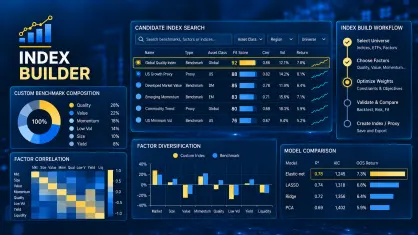
The quality of a factor model depends not only on the available factors, but also on selecting an appropriate subset of explanatory variables. Large factor universes often contain correlated or redundant series, while including too many variables can produce unstable coefficients and overfitted models.
Risk Shell therefore supports several statistical approaches for factor selection and model estimation, including LASSO, Ridge Regression and Elastic Net. These regularized regression methods can be used to control model complexity and reduce the influence of redundant explanatory variables.
Principal Component Analysis (PCA) provides another method for working with large, correlated factor sets by reducing them to a smaller number of statistically significant components. Risk Shell also supports Akaike Information Criterion (AIC) as part of the model selection process.
Factor Models for Stress Testing
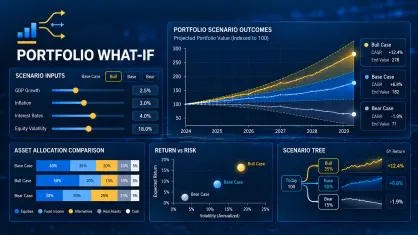
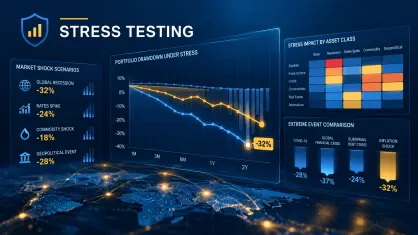
The estimated factor model can also be used as an input to stress testing. Once the relationship between an investment and its relevant factors has been established, the model provides a framework for estimating how changes in those factors may affect the asset or portfolio.
This is particularly useful when direct historical observations are limited or when the required stress scenario is expressed in terms of market and macroeconomic variables. Factor sensitivities can connect changes in equity markets, interest rates, credit spreads, currencies, commodities or other drivers to the expected response of the investment being analyzed.
Applications for Hedge Fund and Fund of Funds Investors
- Identify the principal drivers of fund returns using multivariate factor models rather than relying only on strategy classification
- Measure factor exposures to market, style and macroeconomic variables selected by the user
- Monitor manager style drift and changes in factor sensitivities through time
- Analyze hidden common exposures across managers that may appear diversified at the strategy or fund level
- Compare funds on the basis of their actual factor profiles rather than manager labels alone
- Build factor models for stress testing and scenario analysis
- Support manager research and due diligence where complete position-level transparency is unavailable
Factor & Style Analysis Features
- Returns-Based Style Analysis
- Holdings-Based Style Analysis
- Static and Dynamic Style Analysis
- Multivariate regression factor models
- User-defined factor subsets: macro factors, market indices, style indices
- Dynamic factor exposure estimation using Kalman filters
- LASSO, Ridge and Elastic Net, alongside direct and stepwise regression
- Principal Component Analysis (PCA) for factor selection
- Model selection using Akaike Information Criterion (AIC)
- Historical analysis of manager style drift and changing factor exposures
- Fitted factor models that can be used in Risk Shell stress testing