Alternative Investment Management Software

Risk Shell

Institutional portfolio management, risk analytics and portfolio construction for alternative and multi-asset portfolios.

Integrated investment data, stress testing, portfolio optimization, alternative investment analytics and shadow accounting within one platform.

FoF Manager hero
FoF Manager

Shadow Accounting for Alternative Portfolios

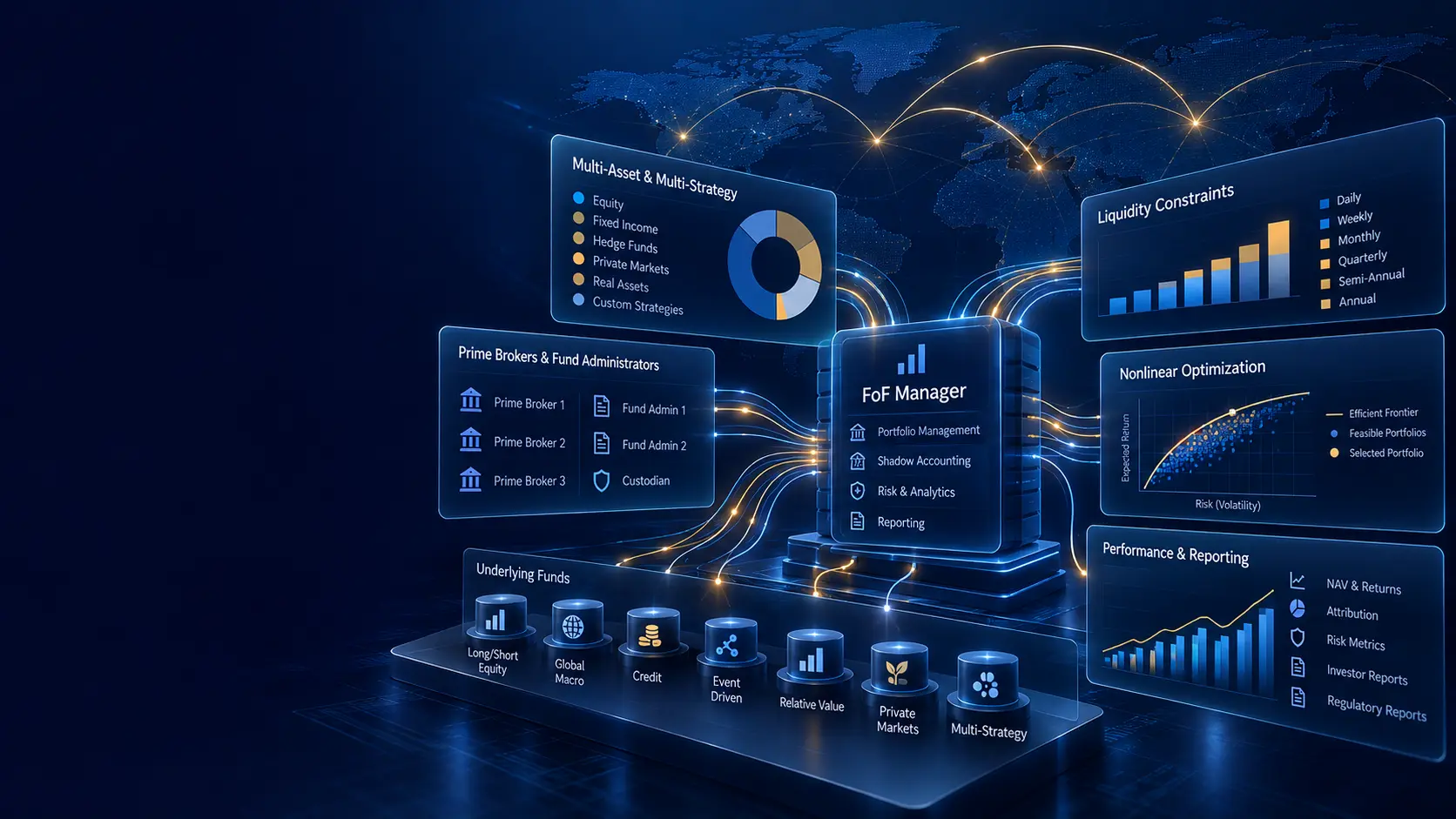
Manage hedge funds, private equity and multi-asset portfolios with liquidity controls, custom classifications and flexible historical accounting.

35+ hedge fund liquidity settings
Explore FoF Manager
Optimization hero
Portfolio Optimization

Nonlinear Portfolio Optimization

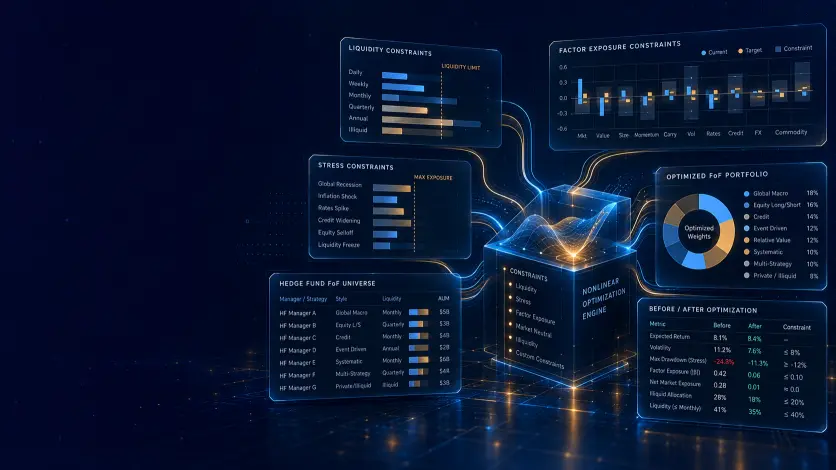
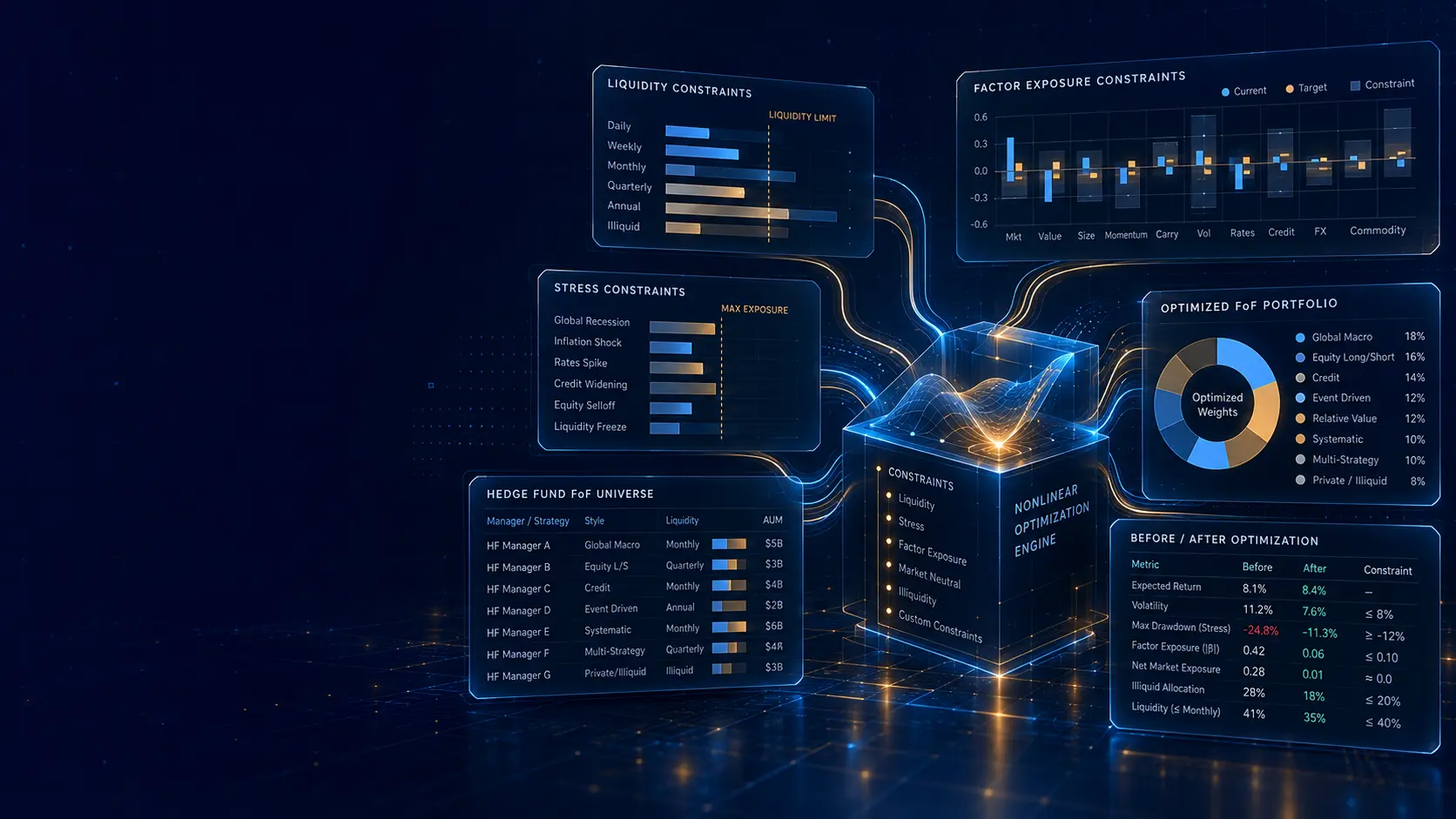
Construct hedge fund-of-funds and multi-asset portfolios with stress-test, factor-exposure, liquidity and other user-defined constraints.

Custom Constraints for market-neutral and risk-controlled portfolio construction
Explore Portfolio Optimization
Risk Shell AI hero
Risk Shell AI

Natural-Language Access to Risk Shell

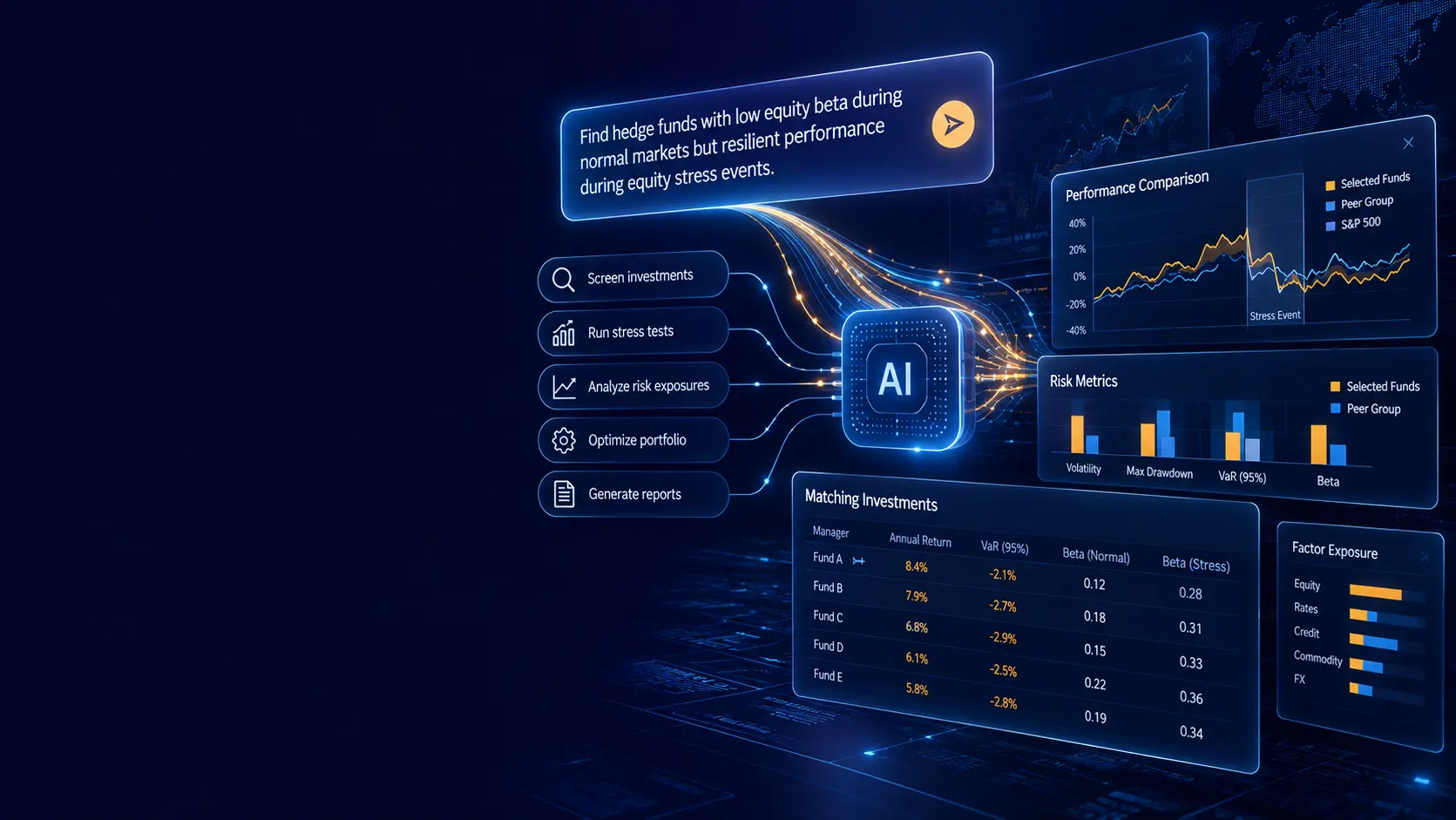
Use natural language to access investment research, risk analytics and portfolio workflows.

2.3B tokens in our in-house financial LLM
Explore Risk Shell AI
Macroeconomic Scenario Screening hero
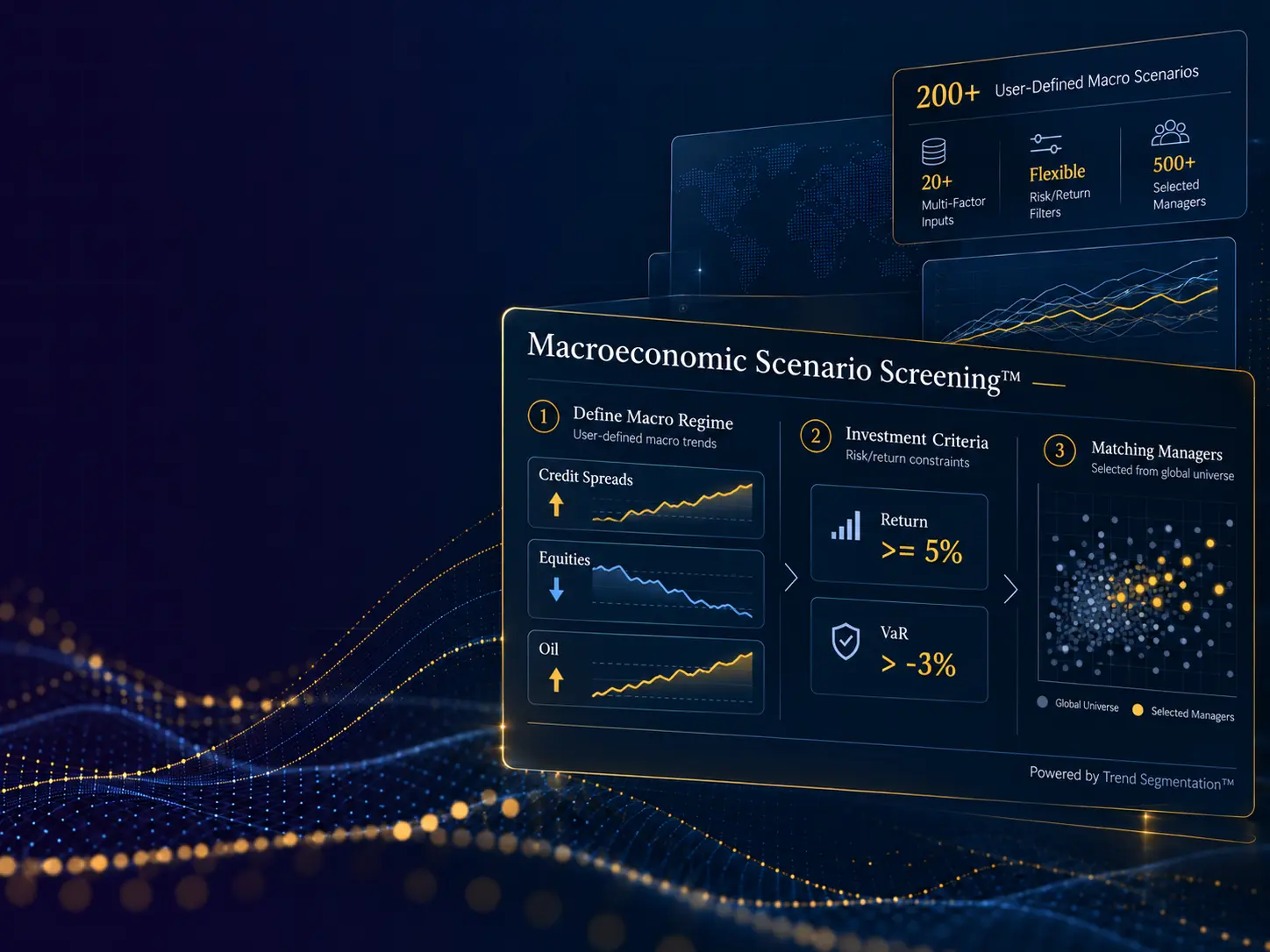
Macroeconomic Scenario Screening

Select Assets for the Scenario You Define

Screen managers by risk and return targets under user-defined macroeconomic scenarios.

Trend Segmentation™ proprietary regime-analysis engine
Explore Scenario Screening
Peer-relative Stress Testing
Portfolio Stress Testing

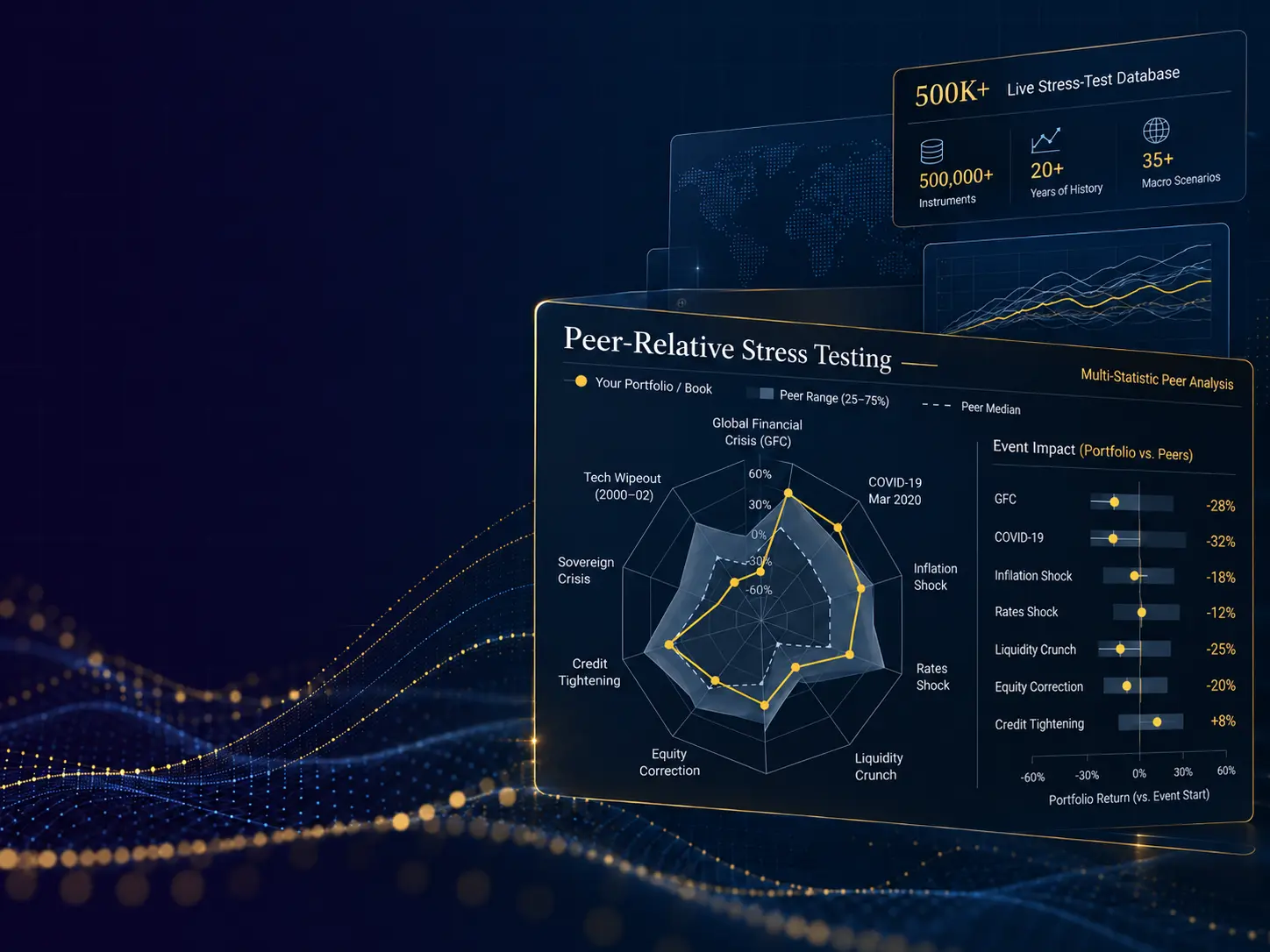
Peer-Relative Stress Testing

Compare extreme-event outcomes with a relevant peer group.

500K+ live stress-tested instruments
Explore stress testing

The methodology of due diligence on hedge funds presents a controversial topic, mostly because of a strong qualitative bias of traditional institutional managers. Such a  bias leads to ignoring or underestimating most investment risks that have to be quantified. Our standpoint on due diligence could be briefly summarized as follows:

  • Due diligence on hedge funds adds up to assessing all the applicable risks, i.e., market, credit, concentration, liquidity, strategy, operational, legal and fraud risk.
  • A robust due diligence system needs to incorporate both the constituent parts - qualitative and quantitative. Any bias prioritizing one part over another, results in ignoring some risk groups.
  • A quantitative component of due diligence needs to address numerous peculiarities and irregularities of hedge funds, such as Non-normality of distributions of returns, which results in inapplicability of the mean-variance methodology to hedge funds and, in turn, inapplicability of the standard deviation as a measure of risk. Inconsistency of hedge fund indices, which leads to inconsistency of the comparative benchmark analysis.
  • Short data series that requires employing advanced statistical techniques to meet the given confidence level.
  • Non-transparency of hedge funds. That drawback makes a few groups of risk (market, credit and liquidity) difficult to quantify.
  • Manager style drift. While this phenomenon is widely recognized, it is rarely measured and applied in practice. Certain risk categories like credit and strategy risks are commonly overlooked, when investigating hedge funds.

ABC Quant Due Diligence Workflow

ABC Quant Due Diligence Workflow