


Operational Risk is the risk of loss resulting from inadequate or failed internal processes, people and systems, or from external events. In a hedge fund, such failures may affect trade execution and settlement, cash movements, valuation, accounting, reconciliation, investor transactions, reporting and other activities required for the proper operation of the fund.
Operational risk differs from market and credit risk because it does not arise primarily from changes in market prices or from the failure of a borrower or counterparty to meet its obligations. Instead, it concerns the processes and infrastructure through which investment and administrative activities are performed. A profitable investment strategy can therefore still generate losses if transactions are incorrectly recorded, payments are improperly authorised, positions are misvalued or critical systems fail.
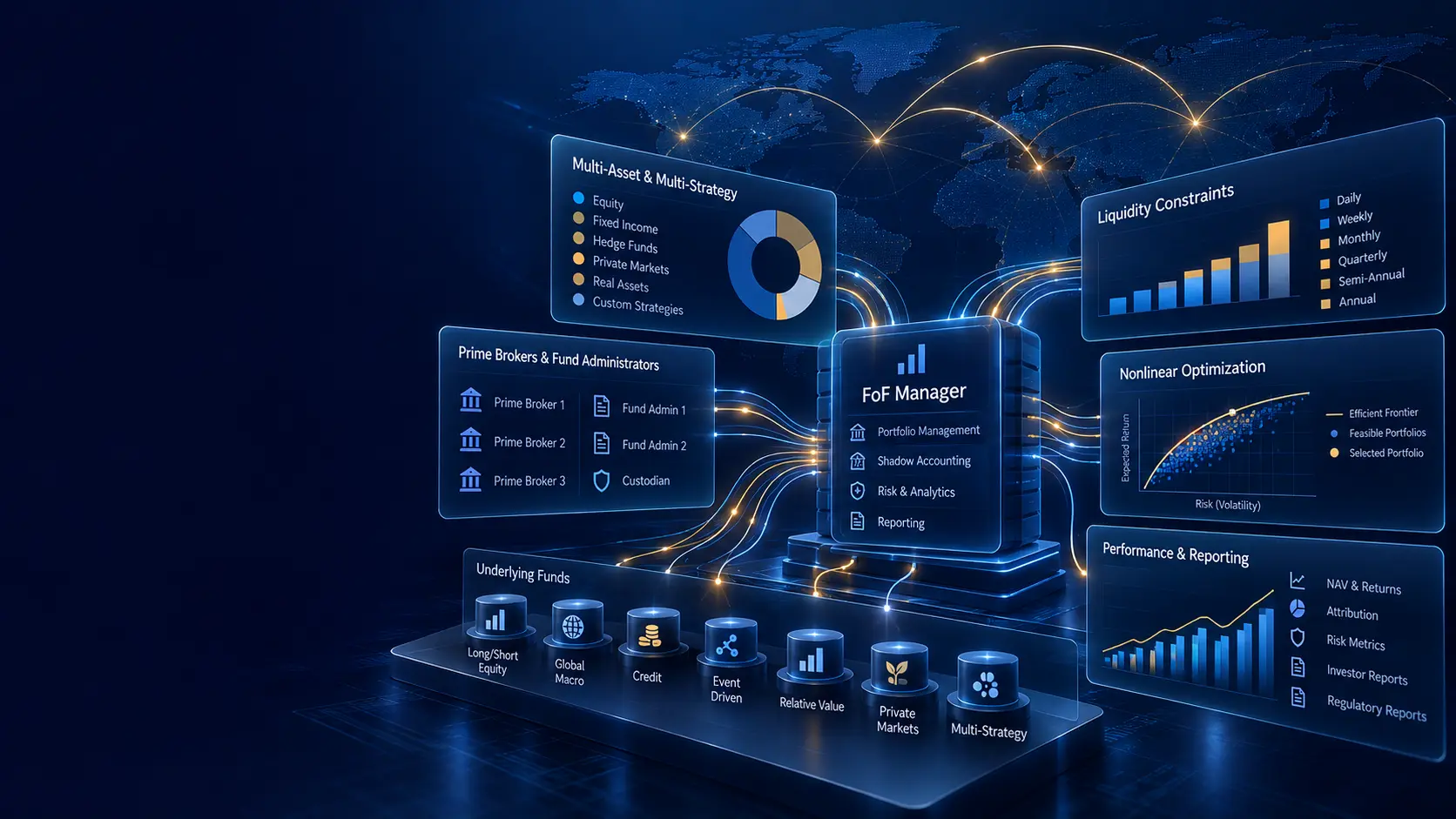
Hedge fund operational risk extends beyond the investment manager itself. Important functions may be performed by fund administrators, prime brokers, custodians, auditors, technology providers and other external service providers. Due diligence should therefore consider both the manager's internal controls and the allocation of responsibilities between the manager and these organisations.
Relevant areas of review include segregation of duties, trade confirmation and settlement procedures, cash-transfer authorisation, position and cash reconciliations, valuation controls, NAV preparation, exception handling, access controls, data integrity and business-continuity arrangements. The assessment should establish who performs each material function, who independently verifies it and how errors or discrepancies are identified and resolved.
People risk includes errors, insufficient staffing, inadequate supervision and excessive dependence on individual employees. Process risk arises where procedures are incomplete, inconsistent or insufficiently controlled. Systems risk includes failures of trading, accounting, risk-management, communication or data-processing systems. External events may include disruptions affecting premises, infrastructure, communications or third-party service providers.
Operational due diligence should not be limited to confirming that written procedures exist. The relevant question is whether controls are appropriately designed, responsibilities are separated where necessary, independent checks are performed, and material exceptions are documented and resolved. Concentration of key functions in a small number of individuals or organisations may increase the consequences of a control failure.
Operational risk cannot be eliminated. The objective of due diligence is to identify material weaknesses in the fund's operating structure, determine whether appropriate controls and independent verification are in place, and assess whether operational deficiencies could impair asset protection, valuation accuracy, transaction processing or the fund's ability to continue normal operations.